Loading cart contents...

Foundations
What is Positive Leadership?
A leadership approach that first asks what makes people and teams strong, and starts right there.
Where the approach comes from
For a long time, psychology was mainly concerned with what makes people ill or unhappy. Positive Psychology turns the question around: what makes people flourish? Martin Seligman, one of its pioneers, describes five building blocks of wellbeing in “Flourish” (2011), known as the PERMA model: positive emotions, engagement, relationships, meaning and accomplishment.
Kim Cameron of the University of Michigan applied this perspective to organisations. He studied teams and companies that perform far above average and asked what their leadership does differently. In “Positive Leadership” (2008, expanded 2012) he sums it up in four strategies: create a positive climate, foster positive relationships, communicate positively and convey meaning.
What Positive Leadership is not
Anyone picturing a petting zoo of friendly working groups is mistaken. Positive does not mean glossing over difficulties or going through the working day with rose-tinted glasses. Mistakes, conflicts and bad numbers are put on the table, but in a climate where people learn from them instead of looking for someone to blame.
Positive Leadership combines high standards with goodwill. Individual practices are quick to apply: saying thank you, making progress visible, asking questions. As an attitude, it takes time to take root in a team. Then it carries the team through difficult phases too.
The foundation
Psychological Safety
Amy Edmondson of Harvard Business School coined the term in 1999. It means the shared belief within a team that you can speak up, with questions, ideas, concerns or mistakes, without being punished or humiliated.
Her starting point was a surprising finding: in her study of hospital teams, it was the better teams that reported more errors. Not because they made more mistakes, but because they dared to talk about them and learned from them. In an internal study of around 180 teams (Project Aristotle, 2012 to 2015), Google concluded that psychological safety is the most important factor for effective teams.
That is why the two approaches belong together. Without safety, positive leadership remains a facade: people who are afraid to speak up do not develop their potential, however friendly the climate seems.
Five dimensions for everyday leadership
Cameron’s four strategies and Edmondson’s psychological safety together make five dimensions. You can align your leadership with them.
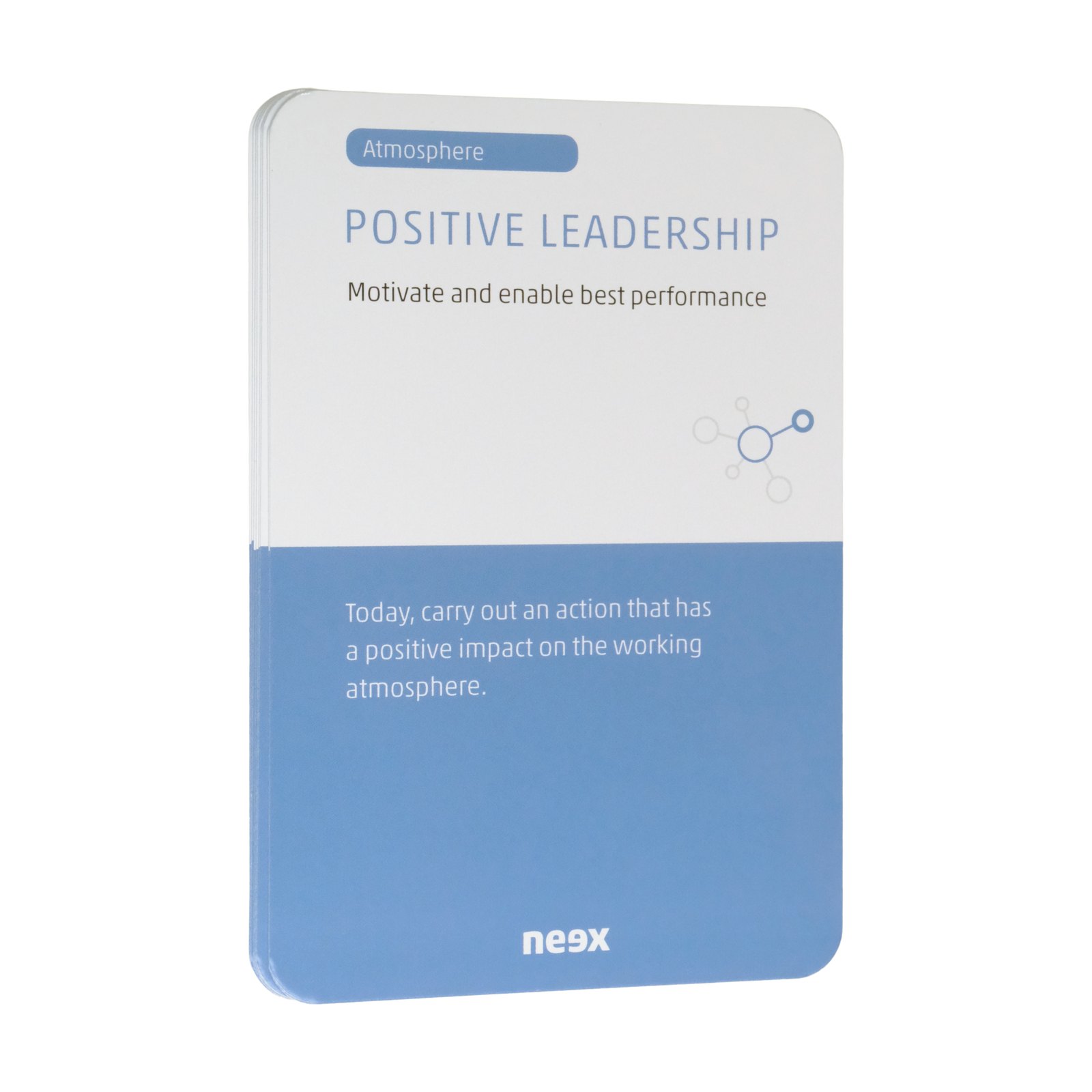
01Positive Atmosphere
A positive leader makes positive emotions possible, fosters personal engagement and helps people feel good and enjoy their work.
BASED ON CAMERON
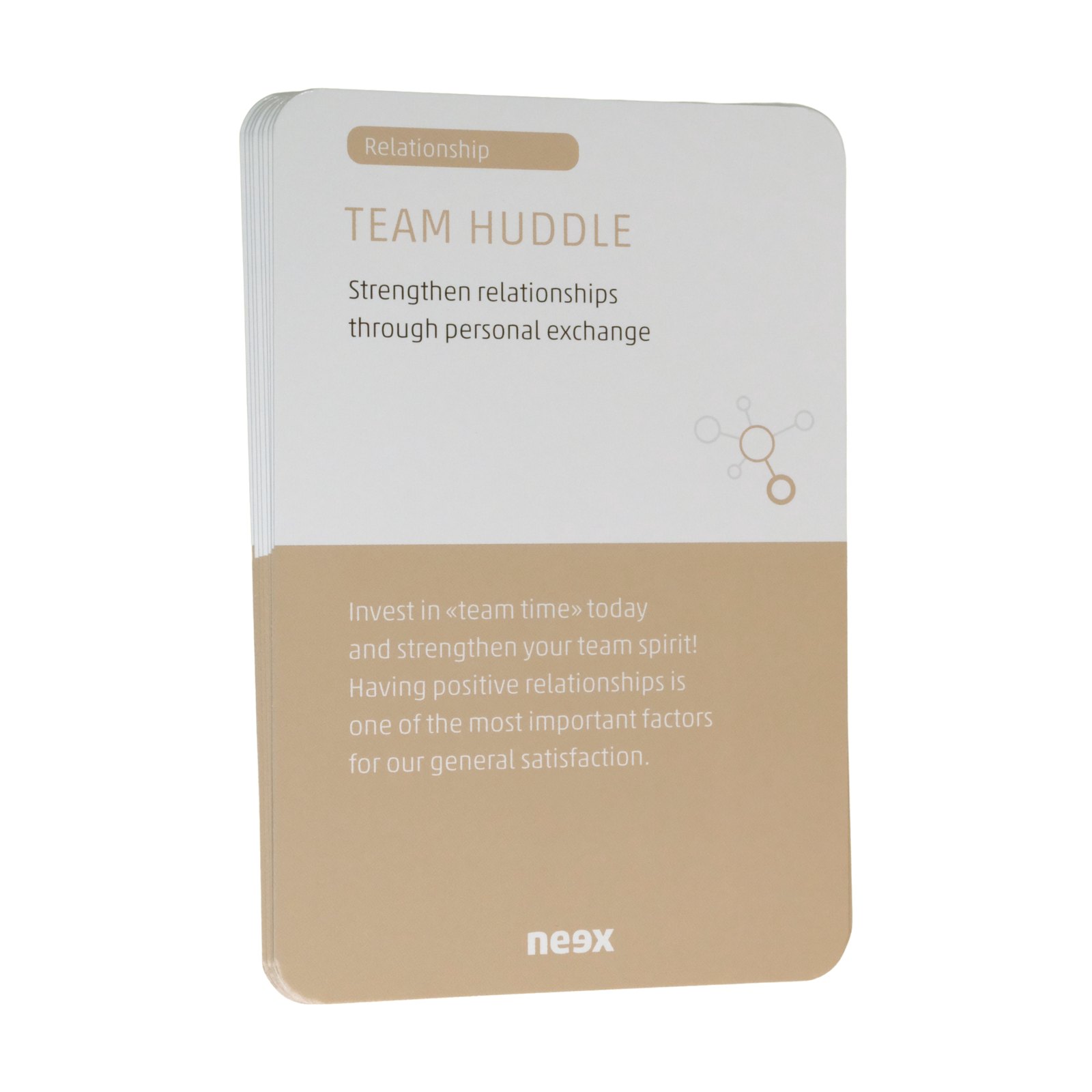
02Positive Relationships
A positive leader leads with a focus on strengths, builds sound relationships and makes sure people support and appreciate each other.
BASED ON CAMERON
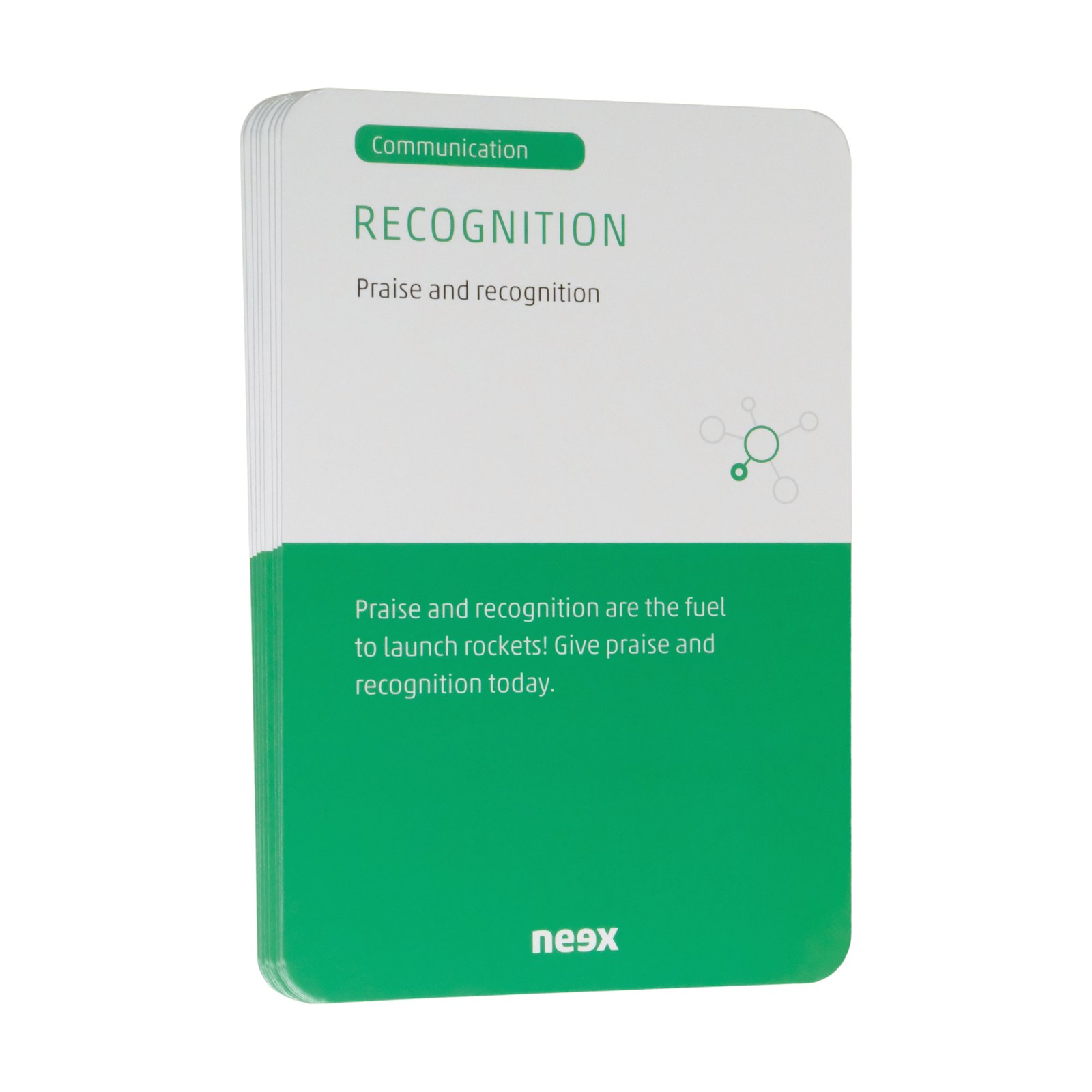
03Positive Communication
A positive leader makes achievements visible, shares the joy of progress with the team and encourages people in their development.
BASED ON CAMERON
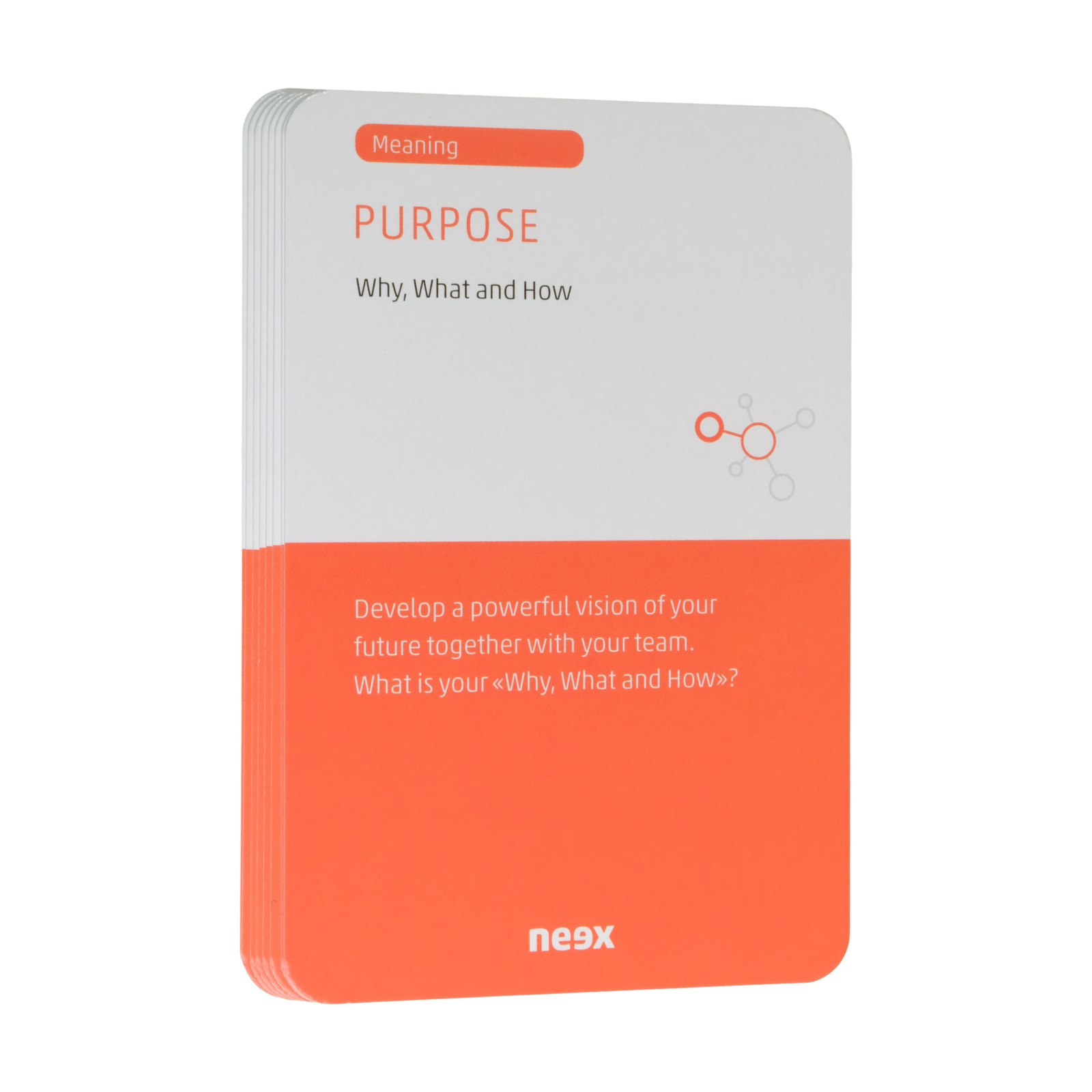
04Positive Meaning
A positive leader conveys meaning: people know that their work is valuable and that their contribution to the bigger picture counts.
BASED ON CAMERON
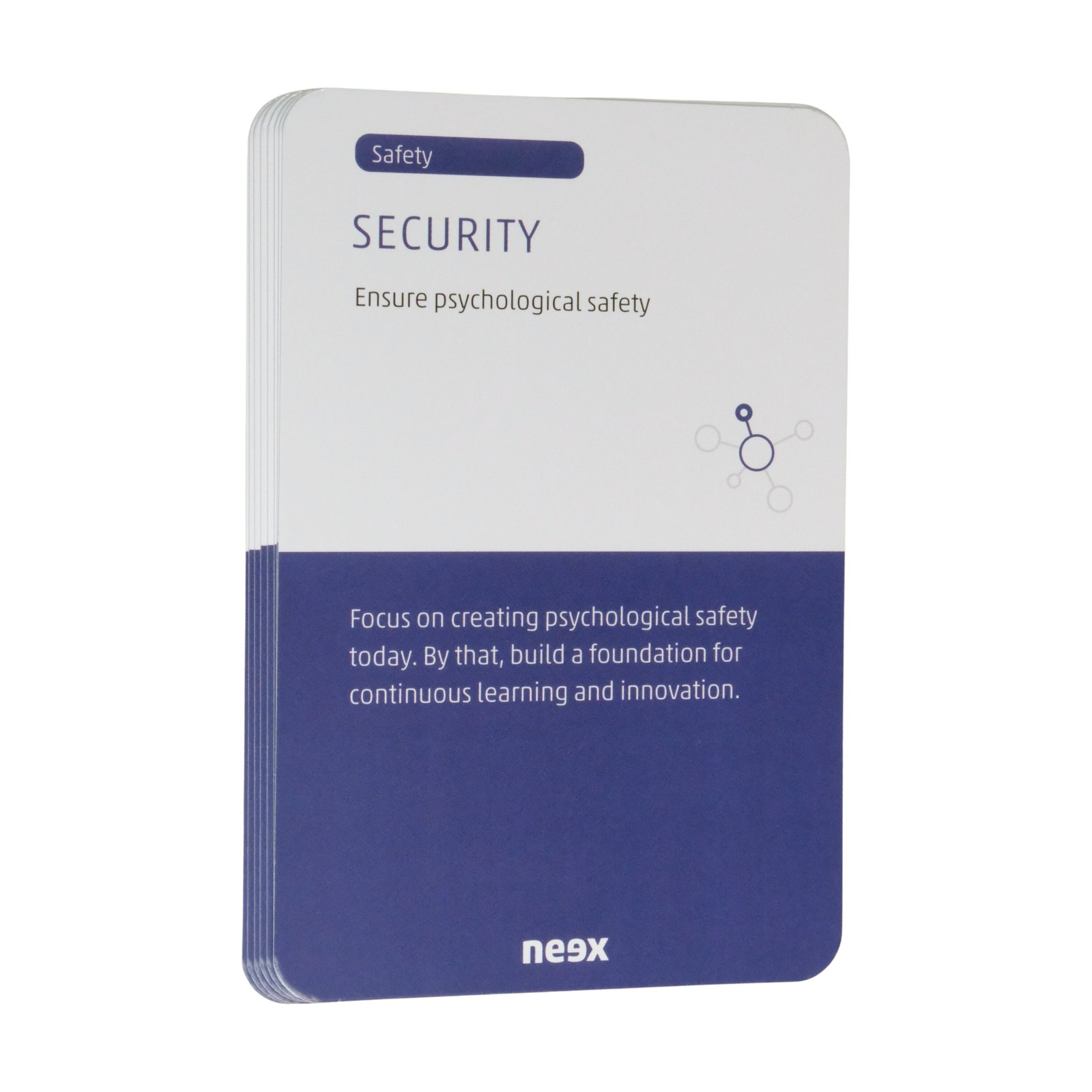
05Psychological Safety
A positive leader creates an environment in which nobody is punished or humiliated for raising questions, concerns, ideas or mistakes.
BASED ON EDMONDSON
Understanding is one thing. Doing is another.
Most leaders find Positive Leadership convincing. It gets difficult on Monday morning, when everyday work takes over. Noah translates the five dimensions into 40 cards: one concrete inspiration every working day, for eight weeks.
Discover Noah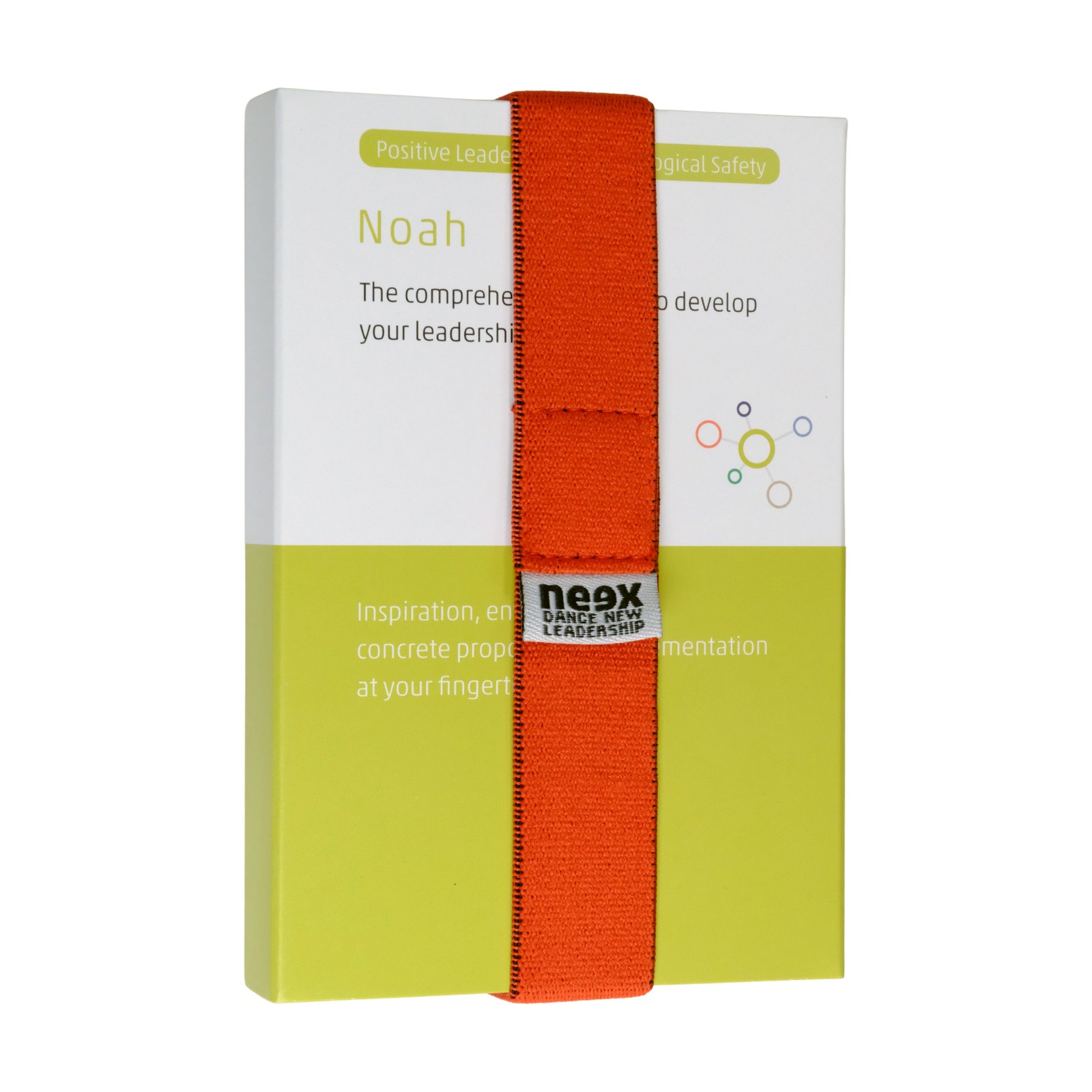
Sources
Cameron, K. (2012). Positive Leadership: Strategies for Extraordinary Performance (2nd ed.). Berrett-Koehler.
Edmondson, A. (1999). Psychological Safety and Learning Behavior in Work Teams. Administrative Science Quarterly, 44(2), 350–383.
Edmondson, A. (2019). The Fearless Organization. Wiley.
Seligman, M. (2011). Flourish. Free Press.
Google re:Work (2015). Project Aristotle: Understanding Team Effectiveness.